The idea sounds almost impossible.
Researchers tested an experimental approach called optogenetic therapy in people with advanced retinitis pigmentosa, a group of inherited diseases that gradually destroy the retina’s ability to detect light.
The treatment gave retinal cells a new job.
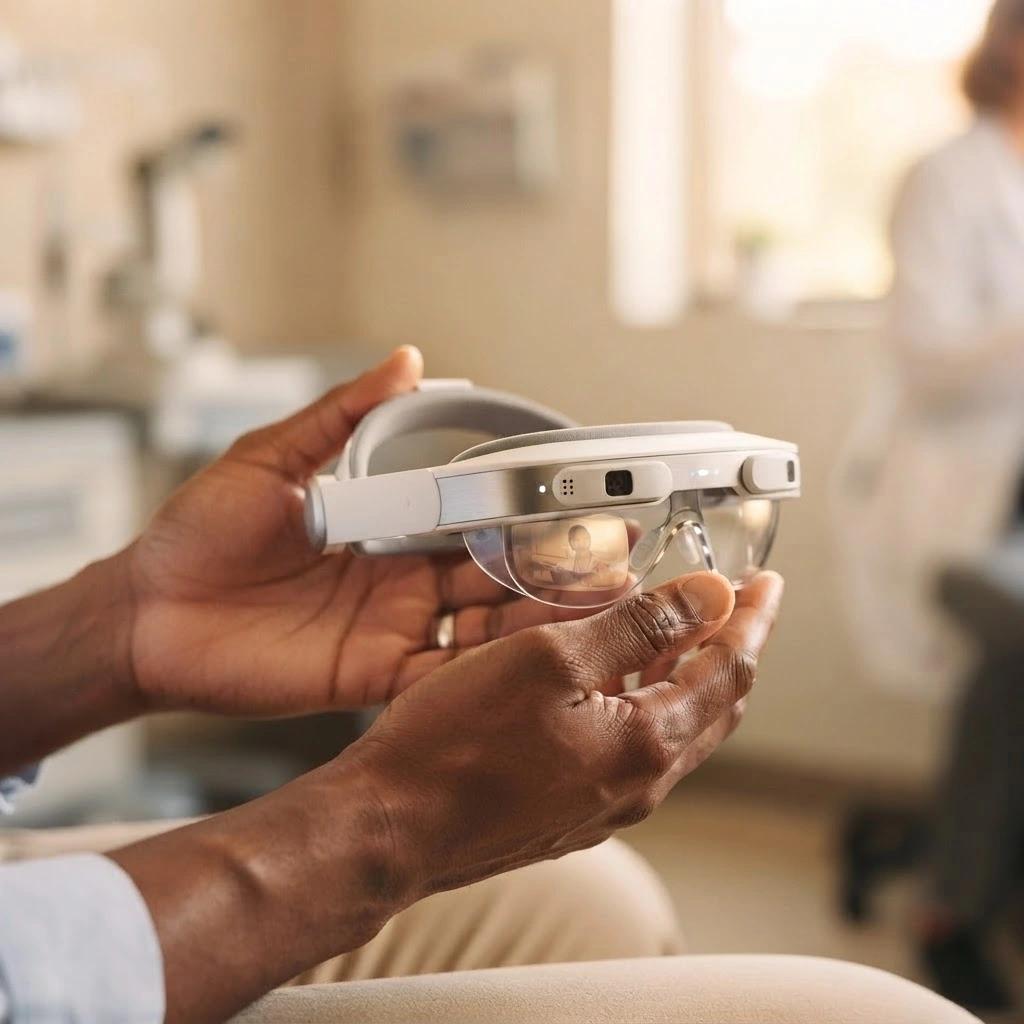
The researchers used gene therapy to make surviving retinal cells sensitive to light. Participants then wore specialized goggles designed to capture images and project light patterns that those modified cells could detect.
For some participants, the world became easier to detect.
In the small study of 10 participants, seven showed increased sensitivity to light, and six had improvements researchers considered clinically meaningful. Some participants also became better at visual tasks such as locating objects, finding doorways or following lines.
This is not restored eyesight — yet.
The treatment did not restore normal vision, and the study was small. It was designed primarily to evaluate safety, so larger trials will be needed to determine how well the approach works and how long any benefits last.
Why this matters
For people with advanced retinal degeneration, even a modest improvement in detecting the world around them could make everyday life more navigable. This early study does not promise restored sight, but it offers evidence that scientists may be able to help damaged eyes communicate with the brain in a new way.
THE GOOD SOMEWHERE TAKEAWAY
Sometimes a breakthrough isn't getting everything back. It's finding a new way forward where there wasn't one before.
Sources & Verification
Original research: New England Journal of Medicine, October 7, 2026.
Additional reporting: Institute of Molecular and Clinical Ophthalmology Basel and Reuters.
Important context: This was a small, early-stage study involving 10 participants. The treatment remains experimental and did not restore normal eyesight. Further safety and effectiveness research is needed.
Category: Health